Education plays an important role in helping every child develop knowledge, confidence, social skills, and independence. However, students have different learning abilities, physical needs, communication styles, and educational requirements. Some children may need additional support to participate in classroom activities, while others may benefit from specialised teaching methods and individualised learning programmes. To address these differences, educational systems use approaches such as inclusive education and special education.
Although both approaches aim to support students with disabilities and diverse learning needs, they follow different methods. Inclusive education focuses on providing equal learning opportunities to all students within a shared educational environment, whereas special education provides specialised instruction and support designed to meet the individual needs of students with disabilities or specific learning difficulties. Understanding these differences helps parents, teachers, and educational institutions choose appropriate learning environments and support systems.
What Is Inclusive Education?
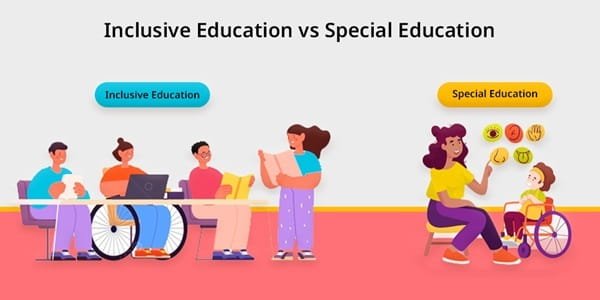
Inclusive education is an educational approach in which students with different abilities, backgrounds, and learning requirements study together in the same educational environment.
Its main objective is to remove barriers that prevent students from participating equally in classroom activities. Instead of expecting every child to learn in exactly the same way, inclusive education encourages schools to adapt teaching methods, learning materials, and classroom environments according to students’ needs.
For example, a classroom may include students with physical disabilities, visual impairments, hearing difficulties, learning disabilities, and students without disabilities. Teachers use appropriate teaching strategies and support services to help everyone participate.
Key features of inclusive education include:
- Equal access to educational opportunities.
- Shared classrooms and learning activities.
- Flexible teaching methods.
- Accessible infrastructure and learning materials.
- Support from special educators and other professionals when required.
- Encouragement of social interaction and peer learning.
- Respect for individual differences and abilities.
Inclusive education aims to create a learning environment where every student feels accepted, respected, and supported.
What Is Special Education?
Special education refers to specialised teaching and educational support designed for students whose disabilities or learning needs require additional or adapted instruction.
It focuses on providing individualised learning opportunities based on a student’s abilities, challenges, and educational goals. Special education may be delivered in a mainstream school with additional support, a specialised classroom, or a dedicated special education institution.
For example, a student with significant hearing impairment may require sign language instruction, assistive listening technology, and specialised communication support. Similarly, a student with a learning disability may benefit from structured lessons, modified learning materials, and additional time for certain activities.
Key features of special education include:
- Individualised teaching strategies.
- Specialised educational materials and resources.
- Individualised Education Plans (IEPs), where appropriate.
- Support from trained special educators.
- Assistive devices and accessible learning tools.
- Modified instructional methods according to student needs.
- Regular monitoring of individual learning progress.
The main objective is to help students overcome learning barriers and develop their academic, social, communication, and independent living skills.
Inclusive Education vs Special Education: Key Differences
Although both approaches support students with additional educational needs, their teaching environments and methods can differ.
| Comparison Factor | Inclusive Education | Special Education |
| Meaning | All students learn together with appropriate support | Specialised instruction for students with specific educational needs |
| Main objective | Equal participation and access | Individualised learning and support |
| Learning environment | Generally shared classrooms | Mainstream or specialised classrooms and institutions |
| Teaching approach | Flexible methods for diverse learners | Tailored teaching methods based on individual needs |
| Student interaction | Encourages learning together | May involve individual or small-group instruction |
| Support services | Provided within an inclusive environment | May include specialised educational and therapeutic support |
| Curriculum | Generally shared with appropriate adaptations | May be adapted or individually designed |
| Main focus | Participation, accessibility, and belonging | Individual learning goals and specialised instruction |
The important distinction is that inclusive education focuses on transforming the learning environment so that all students can participate, while special education focuses on providing specialised educational support according to individual needs.
Benefits of Inclusive Education
Inclusive education offers several academic and social benefits for students.
Promotes Equality: It provides opportunities for students with different abilities to study together and participate in educational activities.
Improves Social Interaction: Students learn to communicate, cooperate, and build friendships with classmates who have different backgrounds and abilities.
Develops Empathy and Respect: Learning together can help students understand individual differences and develop positive attitudes towards others.
Encourages Participation: Accessible classrooms and flexible teaching methods can help more students participate in lessons, discussions, and extracurricular activities.
Builds Confidence: Students who feel accepted and supported may develop stronger self-esteem and a greater sense of belonging.
However, successful inclusion requires trained teachers, accessible infrastructure, suitable learning materials, and adequate support services.
Benefits of Special Education
Special education provides targeted support for students who need specialised instruction.
Individualised Learning: Teaching methods can be adjusted according to a student’s specific strengths, difficulties, and learning pace.
Specialist Support: Students may receive guidance from special educators and other trained professionals.
Suitable Learning Resources: Specialised materials, assistive technologies, and communication tools can improve access to education.
Focused Skill Development: Educational programmes may address academic skills, communication, mobility, social interaction, and independent living.
Better Progress Monitoring: Individual learning goals help teachers evaluate progress and adjust teaching strategies when necessary.
Special education can be particularly valuable when students require intensive or highly specialised support that may not be readily available in a general classroom.
Can Inclusive Education and Special Education Work Together?
Yes. Inclusive education and special education are not necessarily opposing approaches. They can complement each other to provide appropriate educational support.
For example, a student with a visual impairment may attend a mainstream classroom while receiving specialised instruction in accessible reading materials, Braille, or assistive technology.
Similarly, a student with autism may participate in regular classroom activities while receiving additional support from a special educator, depending on individual needs.
This combination allows students to benefit from social participation while receiving the specialised assistance required for learning.
The most suitable arrangement depends on the student’s individual requirements, preferences, accessibility needs, and available educational resources.
Inclusive Education vs Special Education in India
India has taken several steps to promote educational access and support children with disabilities.
The Right of Children to Free and Compulsory Education Act, 2009, provides for free and compulsory elementary education for children aged 6 to 14 years, subject to its provisions. The Rights of Persons with Disabilities Act, 2016, also recognises the right to inclusive education for children with disabilities and establishes obligations concerning accessible and equitable education.
The National Education Policy 2020 further emphasises equitable and inclusive education, including support for children with disabilities and disadvantaged groups.
These frameworks encourage educational institutions to improve accessibility, teacher training, learning resources, and student support. However, the actual availability of services can vary between schools and regions.
Which Is Better: Inclusive Education or Special Education?
There is no single approach that is best for every student. The right educational arrangement depends on the student’s individual learning needs and the level of support required.
Inclusive education can be beneficial for students who can participate meaningfully in mainstream classrooms with suitable accommodations and support. Special education may be necessary when a student requires more intensive or specialised instruction.
In many situations, combining both approaches provides the best support. Parents should discuss their child’s educational requirements with teachers, special educators, and relevant professionals before making decisions.
Conclusion
Inclusive education and special education share the goal of helping students with different abilities access meaningful learning opportunities, but they use different approaches. Inclusive education focuses on creating shared learning environments where all students can participate, while special education provides specialised instruction and individualised support.
Neither approach should be viewed as universally superior. The most effective educational arrangement is one that respects the student’s abilities, addresses learning barriers, and provides appropriate academic and social support. By combining accessibility, specialised teaching, and equal participation, educational institutions can create better opportunities for every learner.
Frequently Asked Questions (FAQs)
Q. What is the main difference between inclusive education and special education?
Inclusive education allows students with different abilities to learn together with suitable support, whereas special education provides specialised instruction based on individual learning requirements.
Q. Is inclusive education suitable for children with disabilities?
Yes. Inclusive education can be suitable when schools provide appropriate accommodations, accessible facilities, trained teachers, and necessary support services.
Q. Does special education mean studying in a separate school?
No. Special education can be provided in mainstream schools, specialised classrooms, resource centres, or dedicated institutions, depending on individual requirements.
Q. Can a child receive special education in an inclusive classroom?
Yes. A student can participate in a mainstream classroom while receiving additional support from special educators and other professionals.
Q. What is an Individualised Education Plan (IEP)?
An IEP is a personalised educational plan that identifies a student’s learning goals, required support, teaching strategies, and methods for monitoring progress.
Q. Which approach is better for children with disabilities?
The appropriate approach depends on the child’s individual needs, abilities, preferences, and available support. Some students benefit from inclusive classrooms, while others may require specialised educational arrangements.
Q. Does inclusive education benefit students without disabilities?
Yes. It can help students develop empathy, cooperation, respect for differences, communication skills, and positive social relationships.