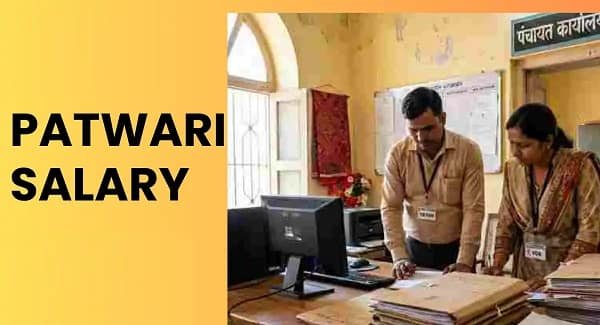
Patwari is one of the most well-known revenue posts in the state government administration of India. Also referred to as Lekhpal in Uttar Pradesh, Kanungo in some states, or Village Accountant in South India, the Patwari is the backbone of the land revenue system at the village level. The post is recruited through state-level exams conducted by agencies such as MPPEB, RSMSSB, HSSC, PSSSB and similar boards.
The role of a Patwari involves maintaining land records, updating revenue maps, measuring land, preparing crop inspection reports, assisting in land acquisition, and serving as the first point of contact for farmers and villagers on all matters related to land ownership and government schemes. Despite being an entry-level revenue post, it carries significant responsibility and is deeply respected in rural communities. For many aspirants from smaller towns and villages, Patwari is among the most sought-after government job opportunities.
Patwari Pay Scale
Patwari is a state government post and the pay scale varies from state to state. Most states place Patwari under Pay Level-4 or Pay Level-5 of the 7th CPC-aligned state pay matrix. The basic pay at entry level generally ranges from ₹21,700 to ₹25,500 per month depending on the state.
In Madhya Pradesh, Patwari basic pay starts at ₹20,800 under the state pay scale. In Rajasthan, it is approximately ₹21,700. In Punjab and Haryana, the starting basic pay may be slightly different based on state pay commission revisions. The post is classified as a Group C or equivalent non-gazetted state government post. Since pay rules differ across states, candidates should always check the official notification for their state’s exact pay scale.
Patwari Salary at One Place
The table below gives a practical starting salary estimate for a newly appointed Patwari. Basic pay is taken as ₹21,700 with DA at 60%. X, Y and Z refer to city categories used by the government for HRA calculation. X cities are major metros like Delhi, Mumbai, Chennai and Kolkata where HRA is 30% of basic pay. Y cities are large towns and state capitals like Lucknow, Jaipur, Bhopal and Patna where HRA is 20%. Z cities are all other smaller towns and rural areas where HRA is 10% of basic pay. Since most Patwaris are posted in rural or semi-urban areas, Z-category salary is the most practically relevant figure.
|
Salary Component |
X City (Metro) |
Y City (Large Town) |
Z City (Rural/Small Town) |
|
Basic Pay |
₹21,700 |
₹21,700 |
₹21,700 |
|
Dearness Allowance, 60% |
₹13,020 |
₹13,020 |
₹13,020 |
|
HRA |
₹6,510 |
₹4,340 |
₹2,170 |
|
Transport Allowance with DA |
₹2,160 |
₹2,160 |
₹2,160 |
|
Approx. Gross Salary |
₹43,390 |
₹41,220 |
₹39,050 |
|
NPS Deduction (approx.) |
₹3,472 |
₹3,472 |
₹3,472 |
|
State Insurance + Other Deductions |
₹300–₹500 |
₹300–₹500 |
₹300–₹500 |
|
Approx. In-Hand Before Income Tax |
₹39,500 |
₹37,300 |
₹35,100 |
|
Practical In-Hand After TDS |
₹38,000–₹39,500 |
₹36,000–₹37,500 |
₹34,000–₹35,500 |
These figures are approximate and based on a 7th CPC-aligned state pay scale. The actual in-hand salary depends on the state, posting location, government accommodation status, applicable state allowances, tax regime and other deductions. Some states offer additional allowances to Patwaris for field work and travel that may increase the monthly earnings.
Gross Salary of Patwari
A newly appointed Patwari posted in an X-category metro city can expect a gross salary of approximately ₹43,000 to ₹44,000 per month. In Y-category cities, the gross salary is around ₹41,000 to ₹42,000. Since most Patwari postings are in rural areas and Z-category locations, the more practical gross salary figure is around ₹38,500 to ₹40,000 per month.
Gross salary includes basic pay, DA, HRA and Transport Allowance. It does not reflect the amount credited to the account. Deductions reduce this figure before the salary reaches the employee.
Patwari In-Hand Salary
The in-hand salary of a new Patwari in a Z-category or rural posting typically falls between ₹34,000 and ₹35,500 per month. Since most Patwaris serve in villages and small towns, this is the most realistic figure for the majority of recruits.
In Y-category cities, the in-hand amount is approximately ₹36,000 to ₹37,500. In X-category metro postings, which are rare for Patwari, the in-hand salary may reach ₹38,000 to ₹39,500. Income tax is generally not a major concern at this salary level for most Patwaris, as the annual taxable income often falls within the basic exemption range after standard deductions.
Some states provide Patwaris with a cycle allowance or field duty allowance for village visits. Where applicable, these add a small additional amount to the monthly in-hand salary. Cost of living in rural postings is also significantly lower, which means the practical value of the salary is higher than it appears on paper.
Main Allowances Given to Patwari
Dearness Allowance is the most significant allowance in the salary structure. It is calculated as a percentage of basic pay and revised twice a year. At 60% DA, a Patwari with basic pay of ₹21,700 receives ₹13,020 per month as DA. This makes DA almost equal to the basic pay itself and is a major component of the gross salary.
House Rent Allowance is paid when government accommodation is not provided. For Patwaris posted in villages or small towns falling under Z category, HRA is 10% of basic pay, which comes to ₹2,170 per month. In Y-category cities it is 20% and in X-category metros it is 30%. Since Patwari postings are mostly rural, the Z-category HRA rate is the most commonly applicable one.
Transport Allowance is given for commuting purposes. For lower pay level state employees, it is typically ₹1,350 plus DA in regular cities, which at 60% DA comes to ₹2,160 per month. In notified higher transport cities, the rate is higher.
Some states provide a Field Work Allowance or Cycle Allowance to Patwaris to cover expenses incurred during village visits and land inspection duties. This varies from state to state and may range from ₹200 to ₹500 per month. Other benefits include state government medical facilities, Leave Travel Concession, earned and casual leave, and children education allowance as per state rules.
Deductions from Patwari Salary
The main regular deduction is NPS contribution. For state government employees under NPS, the employee contribution is 10% of basic pay plus DA. For a new Patwari, this comes to approximately ₹3,472 per month. The state government also contributes a matching amount to the NPS account.
State government group insurance and professional tax, where levied by the state, are also deducted. Income tax is generally not applicable for most Patwaris at the starting pay level since the annual gross income usually falls within or close to the basic exemption limit, especially after standard deductions under the applicable tax regime.
Annual Increment and Salary Growth
Patwari receives an annual increment as per the state pay matrix. After one year of confirmed service, the basic pay moves to the next cell in the applicable pay level. This increment also proportionally increases DA and NPS contribution since both are calculated on basic pay.
The promotion path for Patwari typically goes to Senior Patwari or Kanungo, followed by Revenue Inspector and then Tehsildar. In states like Madhya Pradesh and Rajasthan, Patwaris who clear departmental exams or meet seniority criteria can be promoted to Kanungo and eventually to Naib Tehsildar or Tehsildar, which brings a significant jump in pay level and salary. The promotion path, though slower in some states, offers meaningful long-term growth within the state revenue administration.
Why Patwari Is a Preferred Government Post
Patwari is one of the most stable and rooted government jobs available at the state level. For candidates from rural and semi-urban backgrounds, it offers a government salary, job security, and a respected position in the local community. The cost of living at rural postings is relatively low, making the salary more valuable in real terms.
The post also offers a defined promotion path within the revenue department, access to state government benefits, and the prestige of being a government officer in the village. For many families in smaller towns and villages across India, a Patwari posting is considered one of the most desirable outcomes of a state exam attempt.
FAQs
Q: What is the starting salary of Patwari?
A: The starting basic pay of Patwari is approximately ₹21,700 in most states following 7th CPC-aligned pay scales. With DA, HRA and Transport Allowance, the gross salary can be around ₹38,500 to ₹44,000 depending on posting location.
Q: What is the in-hand salary of Patwari?
A: The approximate in-hand salary of a new Patwari in a rural or Z-category posting is between ₹34,000 and ₹35,500 per month. In Y-category cities it is around ₹36,000 to ₹37,500.
Q: What are X, Y and Z cities for HRA purposes?
A: X cities are major metros like Delhi and Mumbai where HRA is 30% of basic pay. Y cities are large towns and state capitals like Jaipur and Lucknow where HRA is 20%. Z cities are all other smaller towns and rural areas where HRA is 10%. Most Patwari postings fall under the Z category.
Q: Is Patwari salary the same in all states?
A: No. Patwari salary varies from state to state based on state pay commission recommendations. The figures in this article are based on a 7th CPC-aligned starting basic pay of ₹21,700 and are indicative. Candidates should check their state’s official notification for exact figures.
Q: Does Patwari get DA?
A: Yes. Dearness Allowance is paid to Patwari as per the state government DA rate. At 60% DA, a Patwari with basic pay of ₹21,700 receives ₹13,020 per month as DA.
Q: What is the biggest deduction from Patwari salary?
A: The biggest regular deduction is NPS. For a new Patwari, it is approximately ₹3,472 per month. Income tax is generally not a major deduction at this salary level.
Q: Does Patwari salary increase every year?
A: Yes. Annual increment, DA revision and promotions all increase the salary. Even without promotion, basic pay rises each year through the state pay matrix.
Q: What is the promotion after Patwari?
A: The typical promotion path goes from Patwari to Kanungo or Senior Patwari, then to Revenue Inspector, and further to Naib Tehsildar or Tehsildar depending on state rules, departmental exams and seniority.
Q: Does Patwari get a field allowance?
A: Some states provide a Field Work Allowance or Cycle Allowance to Patwaris for village visits and land inspection duties. The amount varies by state and ranges from ₹200 to ₹500 per month where applicable.
Q: Is Patwari a Group C post?
A: Yes. Patwari is generally classified as a Group C or equivalent non-gazetted state government post. The exact classification may vary slightly from state to state.