
The knights hold a significant place in the history of medieval Europe, often portrayed as valiant warriors clad in shining armor, fighting battles, and upholding the ideals of chivalry and honor. However, knights were more than just soldiers; they became a distinct and influential group in society, playing critical roles in politics, warfare, and the social structure of the time.
But why did knights become a distinct group? What factors led to their rise and recognition as a unique class in medieval society? This article explores the historical, social, and political reasons that led to the formation of the knightly class, examining their roles, responsibilities, and impact on the medieval world.
1. The Need for Professional Warriors in Feudal Society
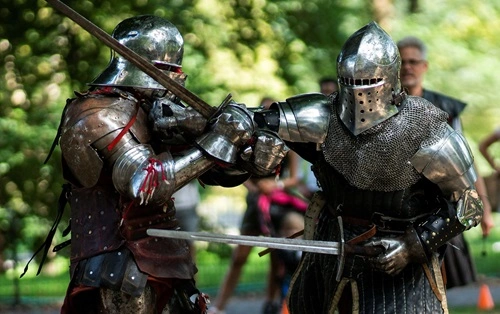
The feudal system, which dominated medieval Europe, was based on a hierarchical structure where land was the primary source of wealth and power. Kings and lords owned large estates, which they needed to protect from invasions, rebellions, and rival factions.
Rise of Knights as Professional Warriors:
- Kings and nobles required trained soldiers who could fight effectively in battles and defend their territories.
- Peasants and commoners lacked the skills and resources for professional warfare.
- Knights, with their specialized training in combat and access to expensive equipment like horses, swords, and armor, became essential military assets.
Thus, the need for professional, disciplined warriors led to the emergence of knights as a distinct group, serving their lords in exchange for land, wealth, and social status.
2. The Development of Feudalism and Vassalage
The system of feudalism played a central role in shaping the identity of knights. Under feudalism, landowners (lords) granted fiefs (pieces of land) to their vassals (knights) in exchange for military service.
Knights as Vassals:
- A knight pledged loyalty and service to a lord, promising to fight in battles and protect the land.
- In return, the knight received land or wealth, allowing him to sustain his lifestyle and afford the costs of warfare.
- This relationship formalized the social status of knights, giving them rights and privileges distinct from common soldiers.
Knights became a powerful military class, tied to the land-owning nobility through bonds of loyalty, protection, and service.
3. Influence of Warfare and Military Innovation
The nature of warfare in medieval Europe also contributed to the rise of knights as a distinct group. Cavalry warfare, which involved armored horsemen, became increasingly important due to its speed, mobility, and shock impact on the battlefield.
Military Role of Knights:
- Knights were highly trained horsemen, capable of leading charges and breaking enemy lines.
- The cost of maintaining a warhorse, armor, and weapons was extremely high, limiting knighthood to those with substantial resources.
- The success of cavalry tactics in battles like Hastings (1066) established the knight’s superiority in warfare, elevating their status in society.
As warfare evolved, knights perfected their combat skills, becoming elite warriors whose military prowess distinguished them from other soldiers.
4. The Role of Religion and Chivalry
Religion played a pivotal role in defining the moral and ethical code of knights. The Catholic Church influenced the ideals of knighthood, promoting the concept of chivalry—a code of conduct that emphasized bravery, honor, loyalty, and protection of the weak.
Knighthood and Chivalry:
- Knights were expected to defend the Church and uphold Christian values.
- The Crusades, religious wars to reclaim the Holy Land, gave knights opportunities to demonstrate their piety and martial skills.
- Chivalry became a cultural ideal, transforming knights into symbols of virtue, not just warriors.
The fusion of religious duty with military service set knights apart, making them moral guardians of both faith and kingdom.
5. Social Status and Political Influence
Knights were not only warriors but also landowners and influential figures in medieval society. Their position in the feudal hierarchy gave them political power, allowing them to govern lands, administer justice, and influence royal policies.
Knights in Politics and Society:
- Successful knights could rise to nobility, gaining titles and wealth.
- Many knights served as advisors to kings or leaders in local government.
- Tournaments and jousts, where knights showcased their skills, further enhanced their popularity and prestige.
This combination of military service, landownership, and political authority solidified the knight’s unique place in society.
6. The Cultural Legacy of Knighthood
Knights became central figures in medieval literature, legends, and folklore. Tales of King Arthur and the Knights of the Round Table, Sir Lancelot, and Sir Gawain popularized the image of the noble knight who fought for justice, honor, and love.
Cultural Impact:
- The romanticized portrayal of knights in stories and poems made them icons of medieval culture.
- The ideals of knighthood influenced European art, architecture, and literature, leaving a lasting legacy.
Knighthood thus became not just a military role but a cultural symbol of virtue, heroism, and honor.
Conclusion
Knights became a distinct group in medieval society due to a combination of military needs, feudal relationships, religious influences, and social dynamics. Their specialized combat skills, loyalty to lords, and adherence to the chivalric code elevated them to a unique status, making them indispensable in both warfare and governance.
The legacy of knights extends beyond their historical role as warriors. They became symbols of courage, loyalty, and honor, shaping medieval European culture and leaving a lasting impact on history, literature, and the modern imagination.

Rahul Kumar is a passionate educator, writer, and subject matter expert in the field of education and professional development. As an author on CoursesXpert, Rahul Kumar’s articles cover a wide range of topics, from various courses, educational and career guidance.